
In the flickering light of a 1920s Zurich lecture hall, Erwin Schrödinger pondered the paradoxes of the subatomic world. Quantum mechanics had upended reality itself—particles behaving as waves, observers collapsing possibilities into fact. Yet amid the math, whispers of Eastern philosophy surfaced. Schrödinger devoured Hindu texts like the Upanishads. This fusion, quantum mechanics mysticism, hinted at deeper truths where science met spirit, challenging the West’s rigid materialism. Today, that idea resonates anew, as theories of consciousness draw parallels between quantum weirdness and ancient insights into oneness.
Pioneers Who Looked Eastward

Werner Heisenberg strolled through India’s spiritual heartlands in 1929, notebook in hand. The father of uncertainty principle absorbed Vedantic ideas of illusion and unity. Niels Bohr, too, embraced yin-yang symbolism for his complementarity principle, where light is both particle and wave until observed. These men, architects of modern physics, sought solace in Taoism and Buddhism. Their encounters fueled a quiet revolution. No longer did equations stand alone. Mysticism offered metaphors for the inexplicable.
Bohr etched the yin-yang on his coat of arms. He argued reality demands complementary views, much like Eastern sages describe the universe’s dance of opposites. Heisenberg later wrote of parallels between quantum leaps and mystical jumps beyond rational thought. These weren’t fringe notions. They emerged from the era’s brightest minds grappling with a universe gone mad.
A physicist in Pasadena recalls a seminar where a colleague invoked Schrödinger’s cat. “It’s alive and dead, just like the self in Zen,” the speaker said. Laughter rippled, but the connection lingered.
Wave-Particle Duality Meets Non-Duality

Eastern non-duality posits no separation between observer and observed. Quantum mechanics echoes this. Electrons exist in superpositions, smeared probabilities until measured. The act of looking shapes outcome. Adi Shankara’s Advaita Vedanta claimed the world as maya, illusion veiling unity. Fritjof Capra captured this in his seminal work, spotting identical patterns across realms. Snowflakes mirror mandalas. Atomic orbitals swirl like chakras.
Capra’s book,The Tao of Physics, sold millions. It mapped quantum fields onto Taoist flow, particle interactions to Buddhist interdependence. Critics dismissed it as poetry, yet it endures. Readers glimpse how subatomic haze dissolves boundaries, much as meditation dissolves ego.
Entanglement: Echoes of Universal Oneness

Particles entangled defy space. Measure one, the other instantly aligns, even light-years apart. Einstein called it “spooky action.” Mystics nod knowingly. In Tibetan Buddhism, phenomena interlink in indestructible nets, like Indra’s jeweled web where each gem reflects all. Quantum mechanics mysticism revives this: everything connects at fundamental levels.
Experiments confirm entanglement’s reality. Photons separated by 1,400 kilometers synchronize flawlessly, as reported in rigorous tests. This fuels speculation. Could minds entangle similarly? Modern theorists probe further, blending physics with contemplative traditions.
Quantum Leaps Toward Consciousness
Does the brain tap quantum effects? Roger Penrose and Stuart Hameroff propose orchestrated objective reduction in microtubules, tiny structures where consciousness arises from quantum computations. This Orch OR model ties mind to quantum vibrations, sidestepping classical limits. Eastern traditions describe awareness as pervading all, beyond neurons—a cosmic consciousness mirrored in quantum holism.Stanford’s analysis of Copenhagen interpretation highlights observer roles, fueling such links. Skeptics counter that warm, wet brains decohere quantum states swiftly. Still, the debate thrives. One neuroscientist likened it to “watching waves crash in enlightenment’s ocean.”
The Rise of a Cultural Phenomenon

Hollywood amplifies quantum mechanics mysticism. Films like What the Bleep Do We Know? blend science with spirituality, drawing crowds. Deepak Chopra sells millions of books merging quantum talk with Ayurveda. Celebrities from Oprah to Russell Brand tout manifestation via observer effects. This isn’t elite theory. It’s mainstream allure.
A 2015 Pew Research report shows many Americans see no conflict between science and faith. Thirty-nine percent view both as complementary. Quantum mysticism taps this vein, offering empowerment in uncertain times. Wellness apps now peddle “quantum healing” meditations, echoing ancient pranayama.
Skeptics Draw a Firm Line
Not everyone buys in. Physicists like Victor Stenger label it “quantum quackery.” Superposition doesn’t mean thoughts bend reality. Entanglement requires preparation, not casual cosmic links. The Copenhagen view stresses probability waves, not mysticism. A Scientific American piece dissects overlaps with theology, urging caution. Mystics wax poetic; equations demand proof.
Yet tension persists. Critics admit early physicists flirted with Eastern ideas. Dismissing entirely ignores history. The clash sharpens inquiry, preventing dogma on either side.
Modern Seekers Find Resonance Online

Anonymous voices surface in digital spaces. One recent account described a breakthrough: “Quantum entanglement clicked during meditation. I felt the universe’s web, no separation.” Such stories proliferate, blending personal epiphanies with Feynman lectures. Forums buzz with debates—does double-slit prove intention shapes matter? Enthusiasts experiment, logging synchronicities.
This grassroots revival democratizes quantum mechanics mysticism. No PhD required. Everyday people weave science into spiritual practice, from yoga retreats citing Heisenberg to podcasts unpacking sutras through qubits.
Implications for Consciousness Theories

Contemporary models push boundaries. David Bohm’s implicate order envisions reality unfolding from holistic depths, akin to Brahman. Integrated information theory nods to panpsychism, where consciousness permeates particles. Quantum mechanics mysticism inspires these, questioning if mind emerges solely from matter.
Hameroff’s work suggests anesthesia disrupts quantum processes in brain tubules, halting awareness. Parallels to samadhi states intrigue. While unproven, the pursuit yields insights. Eastern practices like mindfulness now inform neuroscience labs, closing the loop.
Navigating the Bridge Today

Quantum mechanics mysticism endures not despite scrutiny, but because of it. It invites dialogue between labs and ashrams. In a polarized age, this intersection fosters humility—science reveals limits, mysticism expands wonder. Americans grapple with meaning amid tech’s rush. Here lies solace: reality’s fabric, woven quantum and mystic threads alike.
Practitioners blend both. A Silicon Valley coder meditates on mu koans while debugging entanglement algorithms. Universities host conferences merging Vedanta with quantum info theory. The fusion evolves, promising richer understanding.
Toward a Unified Vision

Looking ahead, expect more crossover. Quantum computing may simulate consciousness, testing mystical claims empirically. Eastern non-locality inspires secure networks via entanglement. Mysticism tempers hype, reminding us equations describe, not dictate, existence.
This isn’t blind faith or soulless math. It’s synthesis. Quantum mechanics mysticism challenges us to embrace paradox, much as the pioneers did a century ago. In that space, new wisdom emerges.
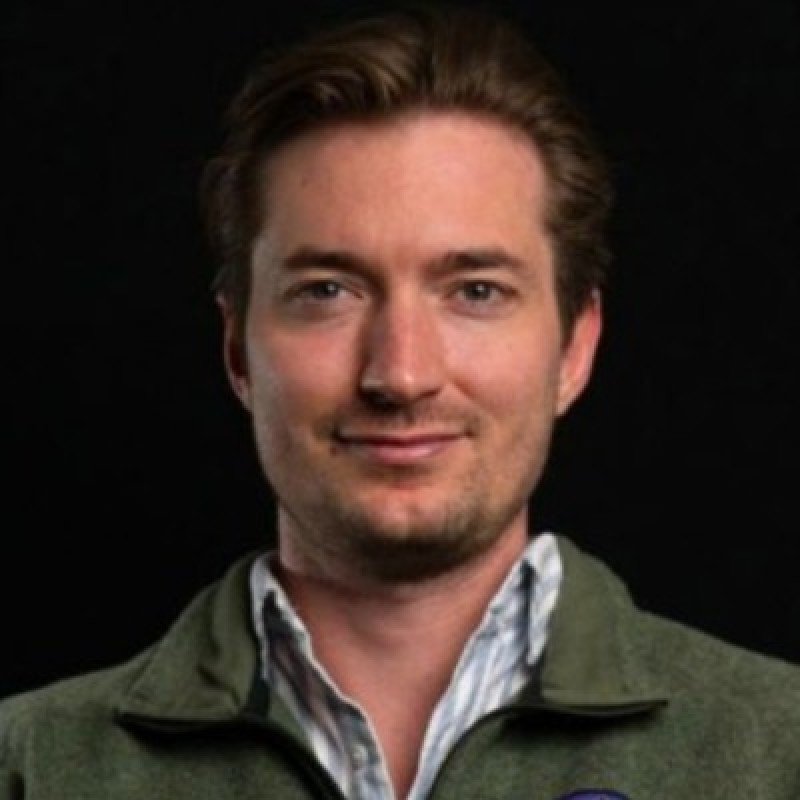
A certified hypnotherapist, Reiki practitioner, sound healer, and MBCT trainer, Christopher guides our journey into the spiritual dimension, helping you tap into a deeper sense of peace and awareness.
Disclaimer
The content on this post is for informational purposes only. It is not intended as a substitute for professional health or financial advice. Always seek the guidance of a qualified professional with any questions you may have regarding your health or finances. All information is provided by FulfilledHumans.com (a brand of EgoEase LLC) and is not guaranteed to be complete, accurate, or reliable.