
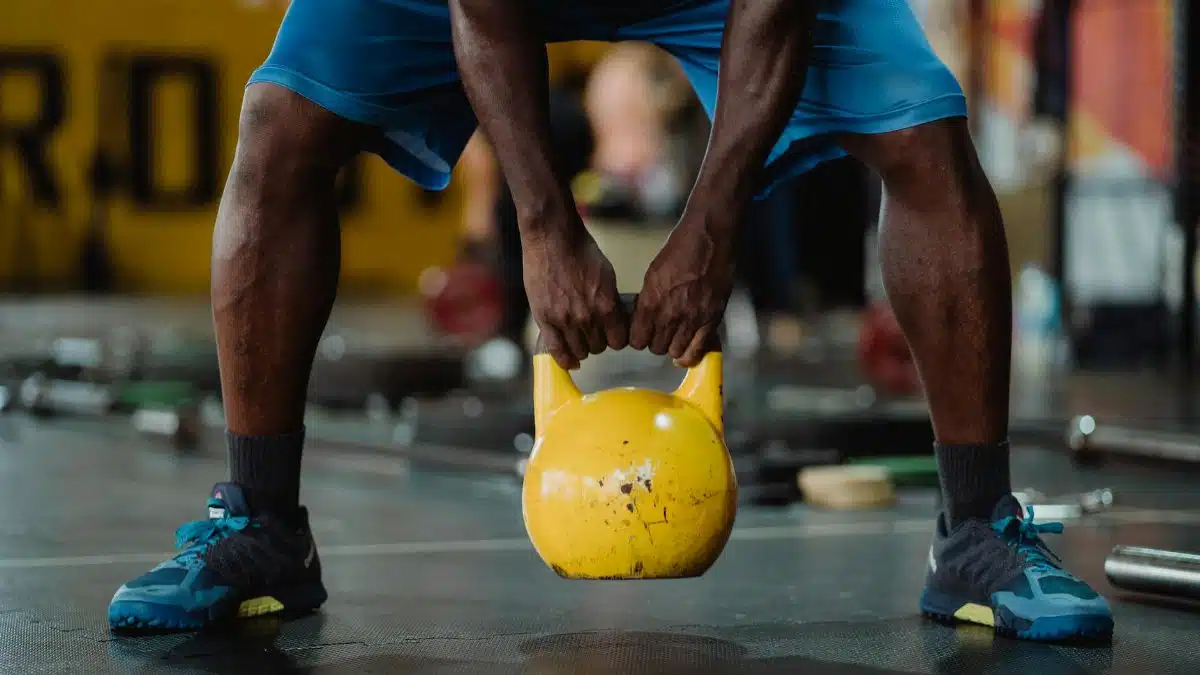
In gyms from CrossFit boxes in Brooklyn to neighborhood fitness centers in Austin, the kettlebell swing has surged in popularity. Trainers bark cues. Sweaty athletes grunt through sets. But beneath the momentum lies a critical truth: kettlebell swing biomechanics often get overlooked. A single misaligned hip hinge can turn this powerhouse move into a backache waiting to happen. Done right, though, it builds explosive power from the hips while sparing the spine. As more middle-aged exercisers chase functional strength, understanding these mechanics matters. The swing isnt just a workout. Its a lesson in efficient movement, rooted in how our bodies evolved to generate force safely.
The Essence of the Swing

Grab a kettlebell. Feet shoulder-width. Hinge at the hips. Swing it back between the legs, then explode forward. The arc peaks at chest height. Gravity pulls it down for the next rep. This cycle powers everything from deadlifts to sprints. Yet the magic hides in the details. Biomechanists break it into phases: the backswing, drive, and float. Each demands coordination. Ignore that, and stress shifts upward.
Consider a typical session. A 45-year-old accountant drops into his garage gym after work. He loads a 35-pound bell. The first few reps feel smooth. Power surges from his glutes. But fatigue creeps in. His back rounds. Suddenly, the lower lumbar takes the load. Thats where trouble brews.
Hip Drive as the Power Source

Hips lead the charge. They extend forcefully, propelling the bell. Glutes and hamstrings fire in unison. This posterior chain activation creates the swing’s signature snap. Research shows peak hip extension velocity hits over 700 degrees per second in elite swings. Thats faster than a baseball pitch.
Without it, arms dominate. The bell yanks forward unnaturally. Shoulders strain. The spine compensates. Proper biomechanics prioritize horizontal force from the ground up. Feet grip the floor. Ankles dorsiflex slightly. Knees track over toes. The result? Clean power transfer.
Neutral Spine: The Safety Anchor

A flat back rules every rep. Imagine a steel rod from head to tailbone. It stays rigid. No rounding. No overextension. This neutral posture distributes shear forces evenly. Deviate, and lumbar discs compress unevenly. Pain follows.
One trainer recalls a client, mid-50s, who swung with a lumbar curve. Weeks later, sharp twinges sidelined her. “It was like my spine was twisting in a vice,” she said. Adjusting to brace and hinge fixed it. Now she swings heavier, pain-free.
Posterior Chain Activation Patterns

Electromyography data reveals the swing’s muscle map. Gluteus maximus peaks at 70 percent maximum voluntary contraction during drive. Hamstrings follow close. Erector spinae stabilize but dont propel. Thats key. They endure, not initiate.
A 2012 study in the Journal of Strength and Conditioning Research compared swings to cleans and deadlifts. Hip moments dominated across all. Swings edged out in velocity, making them ideal for metabolic conditioning.
Common Breakdowns and Fixes
Squatters swing. They drop low, knees forward. The bell stalls. Power leaks. Fix: Cue the hinge. Push hips back first. Feel the stretch in hamstrings.
Arm pullers yank early. Elbows flare. Tension climbs to traps. Solution: Let the bell fall. Pack shoulders down. Explode from core. Another pitfall: hyperextension at the top. Arching the low back spikes compression. Brace abs. Gaze neutral.
Intra-Abdominal Pressure for Stability

Breathing builds the brace. Inhale deep into the belly on the backswing. Valsalva maneuver engages. Press outward against a belt. This pressurizes the torso like a hydraulic cylinder. Spine stays safe under load.
Without it, the core softens. Forces spike on vertebrae. Elite powerlifters swear by this. Everyday swingers should too. Practice on dead hangs first. Feel the cylinder form.
Biomechanical Insights from Science

Ground reaction forces in swings reach 1.6 times body weight. Mostly vertical at load, horizontal at drive. A detailed analysis by NSCA researchers highlights ballistic benefits. Oxygen uptake rivals running. Strength gains rival squats.
Another 2019 electromyography probe mapped oxygen desaturation in muscles. Swings torch fast-twitch fibers efficiently. Trunk stabilizers lit up continuously.
Comparing Swings to Traditional Lifts

Deadlifts grind slow. Swings fly fast. Both hinge. But swings add rhythm, cardio punch. Biomechanically, peak powers mirror Olympic lifts minus complexity. No catch phase. Lower injury ceiling for novices.
CrossFitters blend them. Powerlifters add swings for conditioning. A hybrid athlete in his 40s shared online recently: “Swings woke up my hips after years of squatting heavy. Back feels better than ever.” That sentiment echoes in fitness circles.
Progressions to Master Form
Start unloaded. Hinge with a dowel along spine. Groove the pattern. Add two-hand swings at light weight. Scale up. Single-arm variations challenge stability later.
Wall drills help. Face away, swing to touch. Forces hip snap. Film yourself. Side angles reveal asymmetries. Consistency trumps volume.
Injury Prevention in Practice
Lower back woes plague 20 percent of swingers, per anecdotal reports. Biomechanics fix most. Warm glutes first. Foam roll tight hips. Strengthen anti-rotation core.
The National Center for Biotechnology Information review on resisted swings underscores lighter loads for activation. Heavier risks form collapse. Listen to your body. Sharp pain? Stop.
Real-World Power Translation

Swing proficiency boosts sports. Runners gain stride power. Golfers drive farther. Hikers climb stronger. A weekend warrior, pushing 50, noticed his pickleball serves pop harder post-swing cycles.
In daily life, it shows. Lifting groceries. Chasing kids. The hip hinge carries over. Kettlebell swing biomechanics train movement patterns we use forever.
Building a Sustainable Routine

Three sets of 20, twice weekly. Pair with pulls, presses. Recover fully. Nutrition fuels repair. Protein post-workout. Sleep consolidates gains.
Coaches emphasize longevity. “Its not about max bells,” one says. “Its sustainable power.” Track progress in feel, not just reps. Adjust as age advances.
The kettlebell swing endures because its biomechanics align with human design. Explosive. Efficient. Protective. Get them right, and it transforms bodies quietly, reliably. In a world of fleeting fads, thats enduring value.

As an education professional with a background in Biology and Physics, Dr. Christoph Weber is the analytical heart of Fulfilled Humans. He ensures every piece of content is insightful and grounded in credible knowledge.
Disclaimer
The content on this post is for informational purposes only. It is not intended as a substitute for professional health or financial advice. Always seek the guidance of a qualified professional with any questions you may have regarding your health or finances. All information is provided by FulfilledHumans.com (a brand of EgoEase LLC) and is not guaranteed to be complete, accurate, or reliable.