
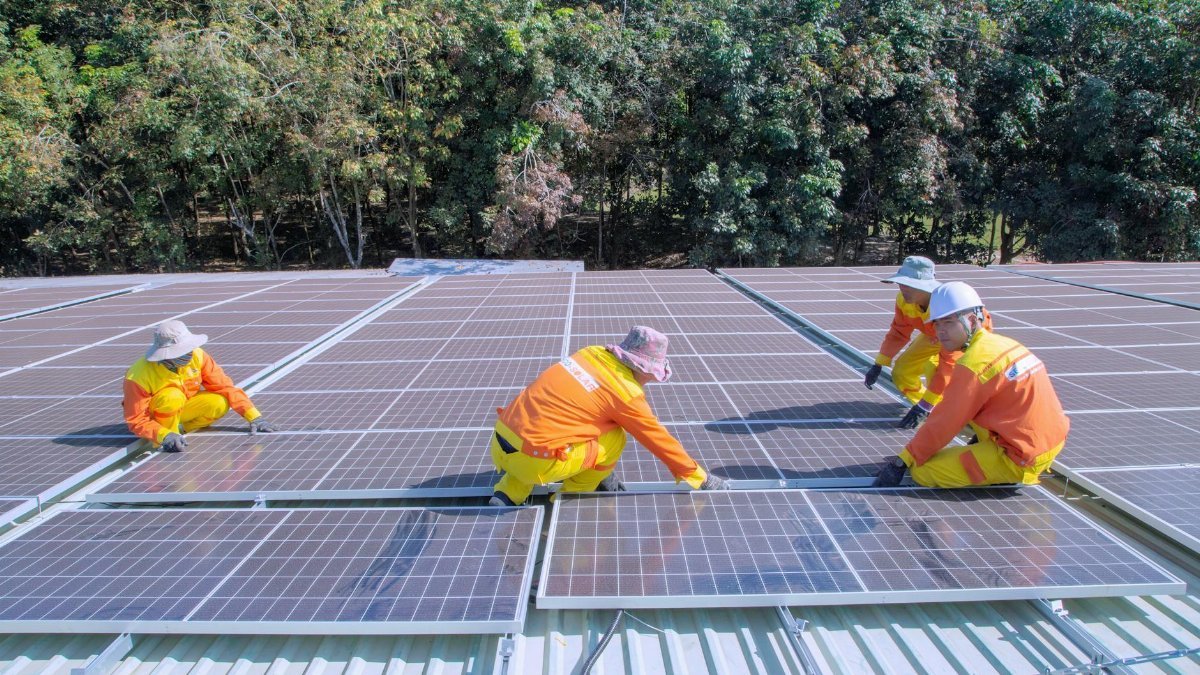
Solar module costs have cratered to all-time lows, with prices dipping below 10 cents per watt for top-tier panels in 2026. This plunge, down over 90% from a decade ago, flips the script on energy economics. Renewables now undercut fossil fuels in most markets worldwide, sparking a rush to install. Experts hail it as a tipping point for clean power dominance. From rooftops to mega-farms, cheaper modules mean faster adoption and billions in savings.
Record-Breaking Price Drops

Solar module costs fell 42% in 2025 alone, hitting $0.095 per watt by early 2026, per industry trackers. Tier-one makers like JinkoSolar and Trina slashed quotes amid fierce competition. This marks the steepest yearly decline ever. Buyers snapped up deals, with U.S. importers reporting volumes up 30%. The trend stems from massive scale-up: global capacity now tops 1 terawatt annually. No turning back now.
China’s Manufacturing Muscle

China pumps out 80% of the world’s panels, driving solar module costs to rock bottom. Factories there churn billions of units yearly, leveraging cheap labor and subsidies. Exports flooded markets, forcing Western firms to cut prices or exit. U.S. tariffs aim to counter this, but imports still dominate. Result: American households score panels at bargain rates, accelerating Inflation Reduction Act projects.
Tech Leaps Slash Expenses

Bigger wafers, PERC to TOPCon shifts, and bifacial designs trim solar module costs without sacrificing output. Efficiency hit 23% for commercial modules. Automation in factories cuts labor by half. NREL data shows manufacturing costs halved since 2020. These gains make utility-scale solar the cheapest new-build power source globally.NREL Levelized Cost of Energy Report
Fossil Fuels Left in the Dust

Solar now beats coal and gas on price in sunny regions. IRENA reports unsubsidized solar LCOE at $0.049 per kWh in top markets, versus $0.075 for gas. Even with storage, hybrids win out. This shift hammers coal plants: dozens shuttered in the U.S. and Europe. Oil giants pivot, with Exxon investing $15 billion in low-carbon tech.IRENA Renewable Power Generation Costs 2023
U.S. Boom Takes Off

Domestic solar module costs benefit from IRA tax credits, dropping effective prices 40%. Installs surged 25% in 2026, led by Texas and California. Utilities like NextEra locked in gigawatt deals under $0.03 per kWh. Homeowners see payback in six years. Job creation hits 300,000, mostly in red states.
Supply Glut Sparks Concerns

Oversupply from Asia tanks solar module costs but risks bankruptcies. Smaller makers fold as margins vanish. U.S. probes dumping, slapping duties on 50% of imports. Still, experts say glut won’t last: demand from data centers and EVs will soak it up by 2027.
Global Ripple Effects

India and Brazil ramp solar bids at sub-$20 per megawatt-hour. Europe’s net-zero push buys cheap Chinese panels despite green rules. Africa skips fossil phase entirely, with Morocco’s Noor complex proving viability. Worldwide, solar capacity could triple by 2030 at current solar module costs.
Barriers to Wider Spread

Grid upgrades lag, interconnection queues stretch years. Intermittency demands batteries, adding 20% to costs. Policy flip-flops, like potential subsidy cuts, spook investors. Yet falling solar module costs offset hurdles, making projects bankable even in cloudy spots.

With a career spanning investment banking to private equity, Dominik brings a rare perspective on wealth. He explores how money can be a tool for personal freedom and positive impact, offering strategies for abundance that align with your values.
Disclaimer
The content on this post is for informational purposes only. It is not intended as a substitute for professional health or financial advice. Always seek the guidance of a qualified professional with any questions you may have regarding your health or finances. All information is provided by FulfilledHumans.com (a brand of EgoEase LLC) and is not guaranteed to be complete, accurate, or reliable.