
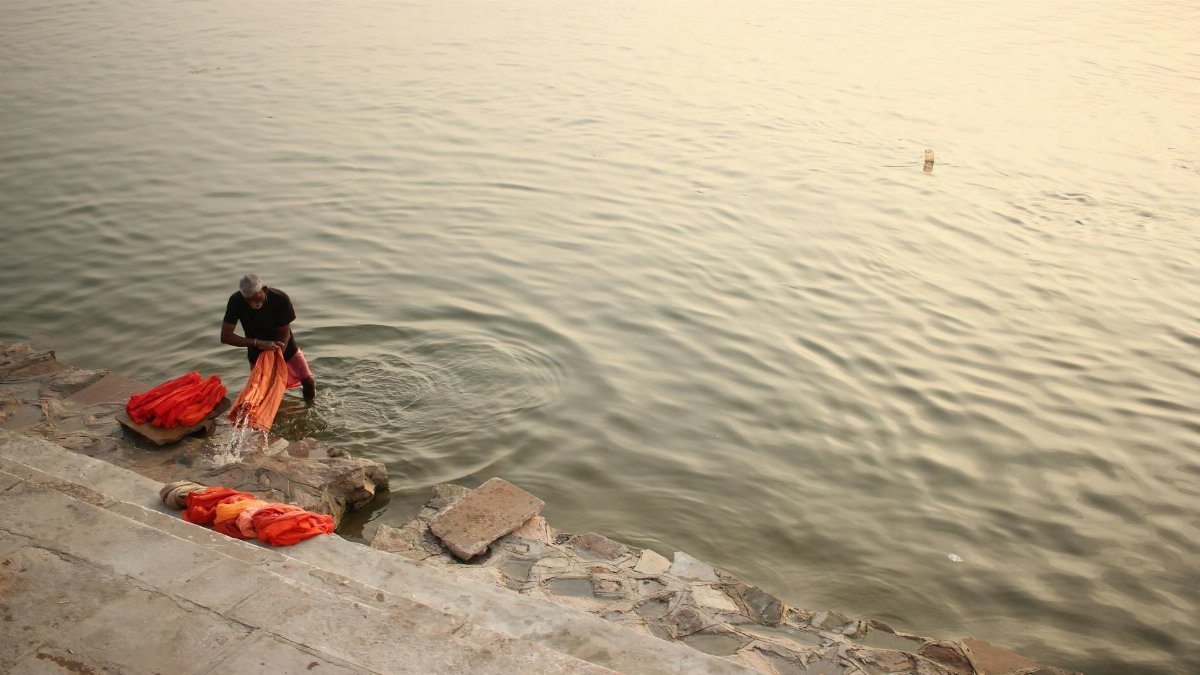
Imagine standing on the banks of a sacred river, its waters shimmering with centuries of whispered prayers. For countless individuals seeking spiritual release, this image isn’t just a daydream—it’s a powerful tool. Ganga visualization karma, the practice of mentally invoking the purifying essence of the River Ganga to cleanse ancestral burdens, has quietly woven its way into modern spiritual circles across the U.S. What was once rooted in ancient Hindu traditions is now finding resonance among those grappling with inherited pain or unresolved family histories. This isn’t about physical travel to India’s holiest river. It’s about harnessing a vivid mental connection to wash away karmic imprints. As stress and generational trauma gain attention in 2025, more Americans are turning to such practices for healing. But how does this work, and why does it strike such a deep chord today?
The Roots of Ganga Visualization Karma
The River Ganga, or Ganges, holds a near-mythic status in Hindu belief, often seen as a divine mother whose waters purify sins and break karmic cycles. Historically, pilgrims have journeyed to its banks for rituals to honor ancestors and seek liberation from past burdens. But not everyone can make that physical trek. Enter ganga visualization karma—a meditative practice where one mentally recreates the river’s presence, imagining its flow as a force that dissolves inherited negativity. Scholars note that this concept ties to broader Vedic ideas of intention and energy, where mental focus can mirror physical acts. According to a study from the University of California, Berkeley, visualization techniques can significantly reduce stress by engaging the brain’s emotional centers ( UC Berkeley News ). For many, this isn’t just theory—it’s a lifeline to peace.
Beyond ancient texts, the practice has evolved. In the U.S., it’s often blended with mindfulness or therapy, adapted by spiritual guides to address modern struggles like generational trauma. The appeal lies in its accessibility. No plane ticket needed. Just a quiet space and a willingness to imagine.
Why Ancestral Karma Resonates Now
Ask someone why they feel stuck, and you might hear echoes of family history—addictions, feuds, or unspoken grief passed down like heirlooms. In 2025, the conversation around generational trauma has surged, fueled by research into epigenetics, which suggests stress can alter gene expression across generations. A report from the National Institutes of Health highlights how trauma can leave biological marks, influencing mental health long after the original event ( NIH News ). Ganga visualization karma offers a spiritual counterpoint to this science, a way to symbolically rinse away those inherited weights.
Therapists and spiritual coaches note a growing curiosity. People aren’t just seeking personal healing; they want to break cycles for future generations. The practice becomes a bridge between past and future, a quiet rebellion against inherited pain.
Visualizing the River: How It Works
At its core, ganga visualization karma is deceptively simple. Find a calm spot. Close your eyes. Picture the River Ganga—its steady current, the coolness of its waters, the faint hum of distant chants. Some practitioners add a mantra, like “Om Namo Gangayai,” to deepen focus. The key is intention: imagine the water sweeping through your family lineage, dissolving dark spots of karma—whether it’s guilt, anger, or loss. A 2019 study from Harvard Medical School found that guided imagery can lower anxiety by activating the parasympathetic nervous system ( Harvard Health ). Here, the river isn’t just a mental picture; it’s a conduit for release.
Yet, it’s not always serene. Some describe initial discomfort—flashes of old family stories or buried emotions. Guides often advise patience. The river’s flow, they say, works at its own pace.
Challenges in Embracing the Practice

Not everyone dives into ganga visualization karma with ease. Skepticism is common, especially in a culture that often prioritizes tangible results over spiritual exercises. “I thought it was nonsense at first,” admitted a 40-something participant during a community workshop in Seattle. “But picturing that river somehow made my anger toward my dad feel… lighter.” Such hesitance isn’t rare. The abstract nature of karma—let alone visualizing a distant river—can feel disconnected from daily life. For others, the weight of ancestral issues surfaces too intensely, stirring up more pain than relief.
Cultural barriers also play a role. While the practice stems from Hindu traditions, its adoption in the West sometimes raises questions of appropriation. Practitioners are encouraged to approach it with respect, often learning from authentic sources or teachers rooted in the tradition. Navigating this balance takes care and curiosity.
Real-Life Impact: Stories of Release

In a quiet suburb of Chicago, a woman in her 50s sat cross-legged on her living room floor, eyes shut, murmuring a mantra. Months earlier, she’d felt crushed by family estrangement—a rift tracing back to her grandparents’ time. After weeks of ganga visualization karma, she described a shift. “It’s not like everything’s fixed,” she said. “But I don’t carry their fight in my chest anymore.” Her story echoes a broader pattern. Across online discussions, anonymous voices often share how visualizing the Ganga brought unexpected calm, a sense of unburdening tied to family legacies they couldn’t name before.
These snapshots aren’t universal. Some feel nothing at first. Yet, for many, the act of mentally returning to the river offers a ritual space to process what therapy or talk can’t always reach.
Blending Tradition with Modern Healing

What makes ganga visualization karma stand out in 2025 is its adaptability. Spiritual coaches often pair it with journaling or therapy, creating a hybrid approach. Imagine visualizing the river, then writing a letter to an ancestor—forgiving or simply acknowledging their struggles. Research from the American Psychological Association shows that expressive writing can reduce symptoms of depression tied to unresolved trauma ( APA Research ). This fusion appeals to those wary of purely esoteric practices, grounding the spiritual in something concrete.
Workshops across the U.S. now teach these blended methods, often framing the Ganga as a universal symbol of cleansing, accessible to any background. It’s less about doctrine and more about personal resonance. The river becomes a mirror, reflecting what each person needs to let go.
A Practice for Uncertain Times

As life in 2025 feels increasingly unsteady—economic pressures, social divides, lingering pandemic echoes—tools like ganga visualization karma offer a quiet anchor. It’s not a cure-all. Nor does it erase history. But it provides a way to confront the invisible baggage many carry, to imagine a current strong enough to sweep it downstream. The practice reminds us that healing doesn’t always require grand gestures. Sometimes, it’s just a mental image, a whispered word, a moment of release.
For those curious to try, start small. Picture the water. Let it flow through the stories you’ve inherited. See where it takes you. The river, even in the mind’s eye, has a way of finding hidden currents.

A certified hypnotherapist, Reiki practitioner, sound healer, and MBCT trainer, Christopher guides our journey into the spiritual dimension, helping you tap into a deeper sense of peace and awareness.
Disclaimer
The content on this post is for informational purposes only. It is not intended as a substitute for professional health or financial advice. Always seek the guidance of a qualified professional with any questions you may have regarding your health or finances. All information is provided by FulfilledHumans.com (a brand of EgoEase LLC) and is not guaranteed to be complete, accurate, or reliable.